
The King’s Great Matter
Wolf HallThis thread follows Henry’s effort to end his marriage to Katherine and the political machinery that turns a private crisis into a national rupture.
increasing Bearing strength in each event
 decreasing
Bearing strength in each eventdecreasingA Conscience in Crisis
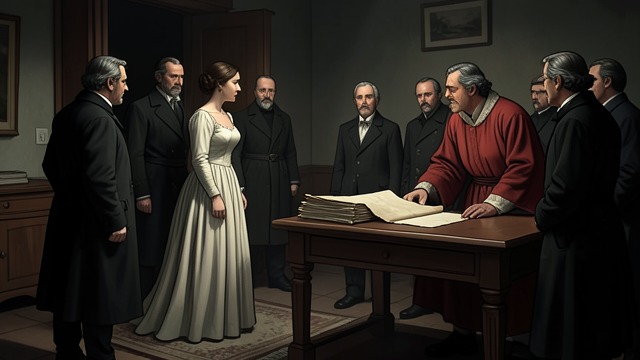
The Marriage Question
A royal claim
Henry VIII argues that his marriage to Katherine of Aragon violates divine law because she had been married to his brother. He presents the lack of a surviving son as evidence of divine displeasure.
Wolsey’s balancing act
Thomas Wolsey tries to satisfy the king without alienating Rome or Katherine’s powerful relatives. Cromwell observes that legal uncertainty is entangled with dynastic fear and the king’s desire.
The Court at Blackfriars
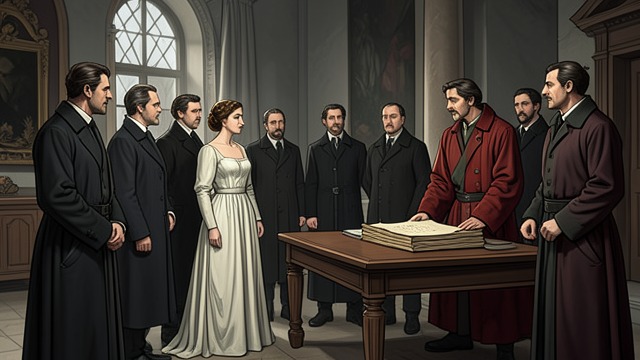
A Public Hearing
Katherine speaks
At the Blackfriars proceedings, Katherine appears in person and insists that her marriage is valid. Her dignity and testimony complicate the king’s attempt to settle the matter through a court aligned with his wishes.
Judgment deferred
The proceedings fail to deliver the verdict Henry wants. The delay weakens Wolsey and makes the dispute an increasingly visible contest between royal desire and ecclesiastical authority.
A New Marriage, New Laws
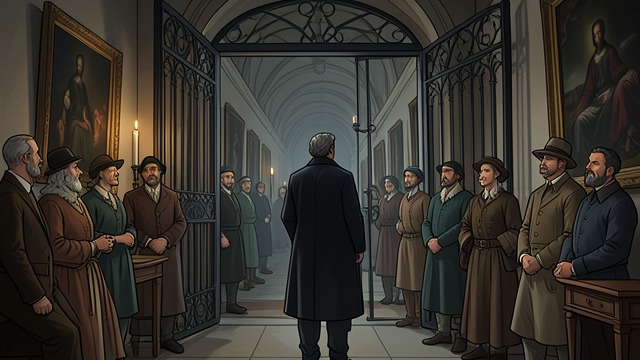
The Break Becomes Law
Marriage and jurisdiction
Henry secretly marries Anne Boleyn before the old marriage has been formally dissolved. Parliament’s measures restrict appeals to Rome and allow the English church’s authorities to decide the case.
A transformed realm
The marriage dispute becomes a constitutional crisis. Cromwell helps build the legal framework that shifts authority from Rome to the king and makes private dynastic choices public law.
1527
1529
1533
